ehl-why-study-hospitality-management

Hospitality Education is Future-Proof

Hospitality is one of the most resilient, adaptable, and dynamic industries on the planet. It is a sector of constant change, where technology and innovation are rapidly evolving to improve the experience of both customers and employees. Over the past decade, this industry has created millions of jobs, offering vast and immensely diverse possibilities for career advancement in an international environment.

With artificial intelligence automating technical roles, the demand for “human skills” in hospitality is becoming more and more essential. The World Economic Forum’s Future Jobs Report confirms that human-centric skills are among the most valuable qualifications for the future. Studying hospitality management equips students with the necessary soft skills to thrive in this unpredictable landscape. Graduates of a hospitality education are well prepared to face the challenges of tomorrow and seize new opportunities as they arise. 

At EHL, the following five competencies are embedded into an educational model designed to equip students for real-world success throughout their career. Whether delivered through our flagship bachelor’s degree, our graduate school or our online courses, the goal is to prepare students to lead the future of the industry.

5 Essential Skills in Hospitality Management for Tomorrow

icon_brainstorm_dark_blue

Problem Solving

icon_business_dark_blue

Working Well with Others

icon_mission_dark_blue

Leadership

icon_entrepreneurship_dark_blue

Innovation & Creativity

icon_education_dark_blue

Active Learning

problem-solving-and-thinking-skills

Problem-Solving

Experiential Education: Developing Thinking Skills Through Real-Life Experiences

Thinking skills, such as analytical thinking, critical thinking, and complex problem-solving, are consistently ranked among the most important competencies for the future. They enable individuals to navigate uncertainty, make informed decisions, and address challenges with a critical mind.

Problem-solving requires more than logic. It involves defining problems clearly, analyzing them from multiple perspectives, and developing solutions that are both strategic and pragmatic. In hospitality, where situations can shift rapidly and client expectations are high, these abilities are essential.

The most effective way to develop problem-solving skills is through experience. When individuals are placed in realistic situations, they learn to assess and adjust their approach based on tangible outcomes. In doing so, they become highly strategic, creative, and interesting people to work with.

power-emotional-intelligence

Working Well with Others

The Power of Emotional Intelligence

One of the most vital skills in today’s workplace is the ability to understand and manage your own emotions while effectively interacting with others. This skill is commonly known as Emotional Intelligence (EI). In service-driven industries such as tourism and hospitality, a significant part of success depends on collaboration, empathy, and good communication.

Many people wrongly assume that Emotional Intelligence is an inherent trait that comes from one's culture or personality. However, Emotional Intelligence can be learned and strengthened over time. It includes key capabilities such as self-awareness, adaptability, empathy, and conflict management. These skills are essential when working in teams and with clients, managing relationships, and creating positive experiences for others.

Being able to work well with others is about more than just cooperation; it’s about navigating team dynamics, not only as a member of that team but also as a leader – one who can instill a collaborative spirit while considering each person’s different capabilities and areas for improvement. These interpersonal dynamics are at the heart of high-performing teams and are crucial in the development of leadership skills.

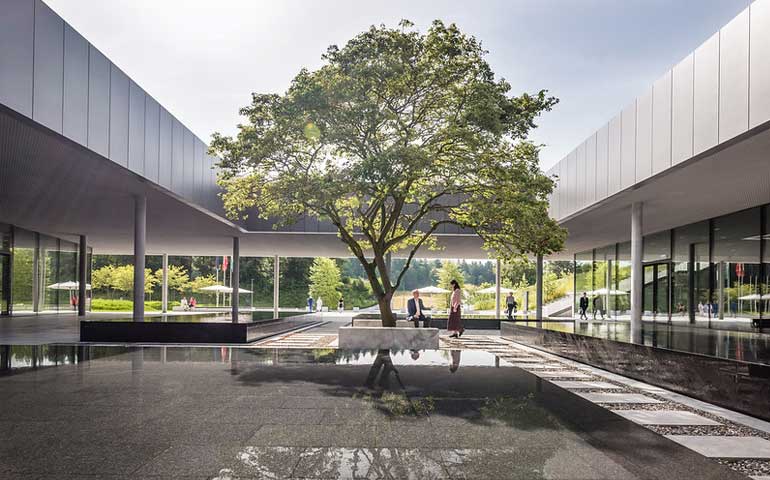
Tranquil courtyard setting featuring a tree, enclosed by brick walls and surrounded by plants

"As future leaders in hospitality and related industries, EHL graduates demonstrate leadership, team spirit, and can communicate effectively in a multicultural context. They are responsible citizens, who contribute to economically and socially sustainable development, through their understanding of environmental, societal and ethical issues."

leadership-skills

Developing Leadership

How to Become a Good Leader

Leadership and social influence are among the most sought-after skills in the modern economy. Leadership is not about hierarchy; it is about the ability to inspire, guide, and motivate others to achieve a shared goal.

Contrary to common assumptions, leadership is not determined by personality or innate traits. It is developed through experience, feedback, and self-awareness. Efficient leaders understand the broader impact of their decisions, communicate clearly, and can adapt their approach depending on the situation and the people they work with. They understand context and society’s changing expectations.

Leadership also requires a fine balance between confidence and humility, built through practice, accountability, and learning from both successes and failures. Being consistently exposed to real responsibility helps to refine one’s leadership style.

innovation-and-creativity

Innovation & Creativity

Thinking Outside the Box:  Transforming the Future One Idea at a Time

Innovation is another skill that tops the most-wanted list in many industries, but the term is widely overused to describe anything that is new or exciting. In fact, innovation is about coming up with solutions for problems and improving the way things are done in order to achieve better results. It's hard to teach someone to "be innovative" but it's not difficult to teach someone to use research and methodology wisely in order to find solutions.

Innovation is often equated directly with creativity, but in fact they are complementary skills. Creativity generates ideas, while innovation uses structured methods to transform those ideas into viable solutions that improve processes, services, or experiences. This requires both imagination and discipline. By learning how to research, test, and refine ideas, people become capable of innovating in a meaningful and productive way.

Innovation and creativity are fundamental in the hospitality industry as they are determining factors in differentiating a business’s services and products in a fiercely competitive field. That is why organizations actively seek employees who can challenge assumptions, think critically, and adapt ideas to real-world constraints.

newcampus

"EHL graduates are Thinkers. They are creative and pragmatic problem solvers who can work in complex and uncertain situations using appropriate technology to analyze and critically assess data using strong analytical and deduction skills." 

lifelong-learning-active-learning

Active Learning

Lifelong Learning: Nurturing Tomorrow's Knowledge

The world changes so quickly that leaders and entrepreneurs must constantly update their knowledge and skills to keep up. That is why one of the most powerful attributes of any good leader is their ability – and desire – to keep learning. Active learning is not just about acquiring information, it is about developing the capacity to adapt quickly, ask questions, and grow from that new knowledge. Industries evolve, technologies change, and new challenges emerge every day, increasing the need to constantly stay informed and keep the mind sharp.

This skill combines curiosity, critical thinking, and engagement. Active learners are proactive; they seek out new knowledge, apply what they learn, and remain open to change. This mindset is crucial for staying relevant in any industry, particularly in dynamic environments such as hospitality.

What are the Benefits of a Hospitality Management Degree?

Hospitality Management Skills at EHL Hospitality Business School

At EHL, the journey to acquire these skills begins with experiential learning, where students are immersed in hands-on hospitality environments. This first-hand experience builds practical knowledge and develops essential interpersonal and problem-solving skills.

As students progress, they combine this foundation with business education and management theory, strengthening their analytical thinking, strategic understanding, and decision-making capabilities. Meanwhile, innovation and creativity are fostered through structured methodologies and concrete applications, including exposure to entrepreneurship and concept development.

Throughout our programs, collaborative work, leadership opportunities, real-life consultancy projects, and industry internships allow students to apply what they learn in diverse and challenging contexts. They receive continuous feedback, helping them grow in confidence and refine their approach. That is complemented by the richly supportive environment at EHL – whether on campus or online – which offers plenty of opportunities to learn from collaborating with peers from all over the world. Students connect and engage as individuals, but also as a group, through experimenting, reflecting, and connecting theory to practice.

Lastly, EHL creates a strong mindset of lifelong learning, ensuring that graduates leave not only with applicable skills, but with the ability to continue developing their knowledge and updating their competencies throughout their career. The result is a highly sought-after employee profile: our graduates are adaptable, collaborative, and prepared to enter the career of their choice, whether in hospitality or beyond.

ehl-students-bachelor-home

Bachelor’s Degree in Hospitality

Combining hands-on learning, industry immersion, and applied academic projects, this degree provides a solid professional and intellectual foundation to launch an international career.
Our Bachelor
ehl-students-master-home

Master’s Degrees in Hospitality

For recent graduates and young professionals, our full-time, on-site master’s degrees give you strong professional expertise and resources to accelerate your career progression.
Our Masters
EHL-Passugg_Blog_HoKo_SOG-vs-BOG_image_02

Swiss Professional Diplomas

With a strong focus on combined academic and practical learning, our EHL campus in Passugg offers Swiss professional hospitality programs with a contemporary, immersive approach that prepares graduates to create amazing guest experiences.
Our Swiss Professional Diplomas