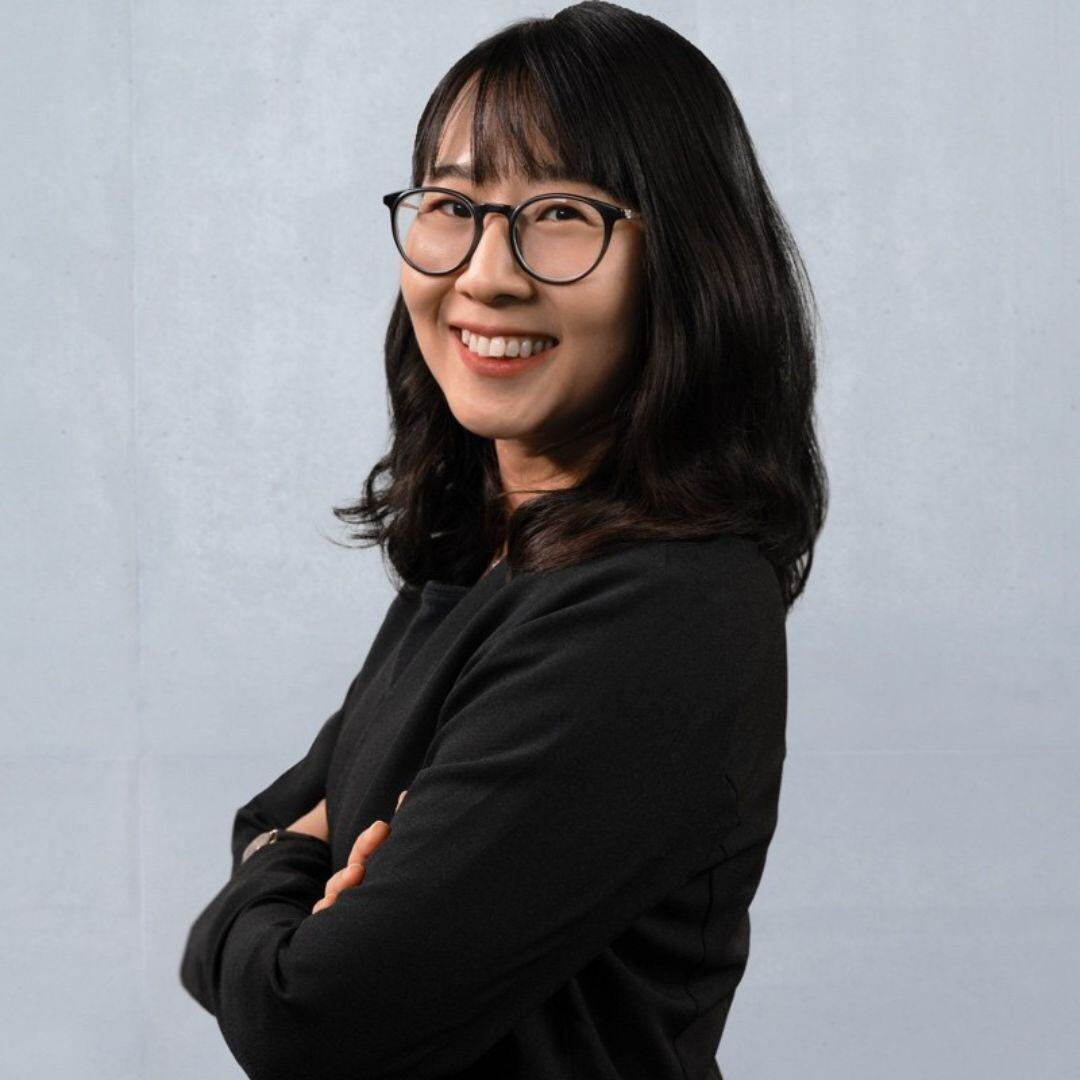
Back to Faculty

Shirley Tan

Dr Shirley Tan

Dr Shirley Tan

Adjunct Professor

Expertise

Biography

Dr Shirley Tan is a distinguished educator and researcher specialising in education methods and business communication. She joined EHL in 2024 as a Visiting Lecturer in Practical Arts, focusing on Introduction to Business Communication. She subsequently continued to teach the Academic Writing course and was appointed as the course representative. 

Her teaching emphasises helping students recognise the relevance and connections between learning and the workplace, equipping them with clear, effective, and professional communication skills to succeed as future leaders in the hospitality industry. As the recipient of the prestigious MEXT Scholarship from the Japanese government, Shirley earned her PhD in Educational Sciences from Nagoya University. She also holds a Master’s degree in Teaching English as a Second Language from the National University of Malaysia. With extensive experience in English Language Teaching, she has taught across various educational levels, from primary to tertiary, in Malaysia, Japan, and Switzerland, enriching her understanding of diverse cultural and communication styles.

Beyond her teaching, Shirley is an active researcher in teacher education. She is the co-editor of Irish Educational Studies, a Q1-ranked journal, and serves as an Executive Committee member of the World Association of Lesson Studies. She has also been awarded Erasmus+ funding for an initial teacher education project. Drawing on her pedagogical expertise, she conducts professional development for practitioners worldwide and disseminates her research findings through scientific publications and presentations. She brings a global perspective and profound pedagogical knowledge to her teaching at EHL.

Awards

21st Century Human Development Research Award 2025, Nagoya University

Education

PhD in Educational Sciences (Methods ofEducation), Nagoya University, Japan

Courses Taught

SCHOOL OF PRACTICAL ARTS
• Introduction to Business Communication
BACHELOR OF SCIENCE IN INTERNATIONAL HOSPITALITY MANAGEMENT
• Academic writing

Teaching Location

EHL Campus Lausanne

Journal publications

Sarkar Arani, M. R., Lander, B., Shibata, Y., Iksan, Z., & Tan, S.(2025). “Doingfractions” and “understanding fairness”: Examining the cultural scripts of amathematics lesson through the eyes of Japanese and Malaysian educators. PROSPECTS.https://doi.org/10.1007/s11125-024-09714-8<spanlang=en-gb> </spanlang=en-gb>

Tan, S.,Goei, S. L., & Willemse, T. M. (2024). Global insights on lesson study ininitial teacher education: A systematic literature review encompassing English,Japanese, and Chinese language sources. Teaching and Teacher Education, 152,104791. <ahref="https:>https://doi.org/https://doi.org/10.1016/j.tate.2024.104791</ahref="https:><spanlang=en-gb></spanlang=en-gb>

Tan,S. (2024). Get on board withvisualising students’ thinking through bansho in Lesson Study. Pedagogical Dialogue 49<spanlang=fr>(3),24-33.https://doi.org/ 10.62670/2308-7668.2024.49.3.003</spanlang=fr>

Sakamoto,M., Tan,S. &Clivaz,S. (2024). Social, Cultural and PoliticalPerspectives of Generative AI in Teacher Education: Lesson Planning in JapaneseTeacher Education. Exploring New Horizons:Generative Artificial Intelligence and Teacher Education<spanlang=en-us style="line-height: 115%;">,178.</spanlang=en-us>

Tan, S. A. C. Y., Jill, L. S.S., Tan, S., & AkhaviZadegan, R. (2023). Exploring the Inclusivity ofAssessment ePortfolio for Multimodal Literacy During the Pandemic: A Case Studyin Malaysian Higher Education. In B. More, S. Biju, & V. Pallath (Eds.),Improving Inclusivity in Higher Education : Addressing the Digital Divide inthe COVID Pandemic (pp. 139-161). Springer Nature Singapore. <ahref="https:>https://doi.org/10.1007/978-981-99-5076-8_9 <spanlang=en-us></spanlang=en-us></ahref="https:>

Tan, S., Clivaz, S., & Sakamoto, M. (2023). Presenting multiple representationsat the chalkboard: bansho analysis of a Japanese mathematics classroom. Journalof Education for Teaching, 49(4), 630-647. <ahref="https:>https://doi.org/10.1080/02607476.2022.2150538</ahref="https:><spanlang=en-gb> </spanlang=en-gb>

Tan, S.(2022). Variations of Board Writing Styles in Japanese Schools: How Is ItRelated to the Teaching of School Subjects? The Teacher Educator, 1-21. <spanlang=en-gb>https://doi.org/10.1080/08878730.2022.2140237<spanlang=en-gb></spanlang=en-gb></spanlang=en-gb>

Tan, S., & Zadegan, R. A. (2022). EmpoweringYoung Women with Flexible Online English Literacy Education. The UniversityGrapevine(10), 12-14.

Tan,S. (2021). Banshoas Part of Lesson and Lesson Study: From the Origins to the Present. <spanlang=en-gb>International Journalfor Lesson and Learning Studies.</spanlang=en-gb> 10(4), 378-392.https://doi.org/10.1108/IJLLS-09-2021-0076

Clivaz,S., Sakamoto, M. et Tan, S. (2021). Comment une addition peut-elle devenir unesoustraction ? Le rôle du schéma en barres dans une leçon de mathématiquesjaponaise. Revue de Mathématiques pour l'école, (236),27-35.

<spanlang=fr> Tan,S., Nozaki, S., Fu, H., & Shibata, Y. (2021). The principles of teacher’sdecision-making in Japanese board writing (bansho) process. Asia PacificJournal of Education, 28(3), 1–16.https://doi.org/10.1080/02188791.2021.1924119 </spanlang=fr>

Tan, S., Fukaya, K., & Nozaki, S. (2018). Development of bansho (boardwriting) analysis as a research method to improve observation and analysis ofinstruction in lesson study. International Journal for Lesson and LearningStudies, 7(3), 230-247.https://doi.org/10.1108/IJLLS-02-2018-0011