Zurück zu Fakultät

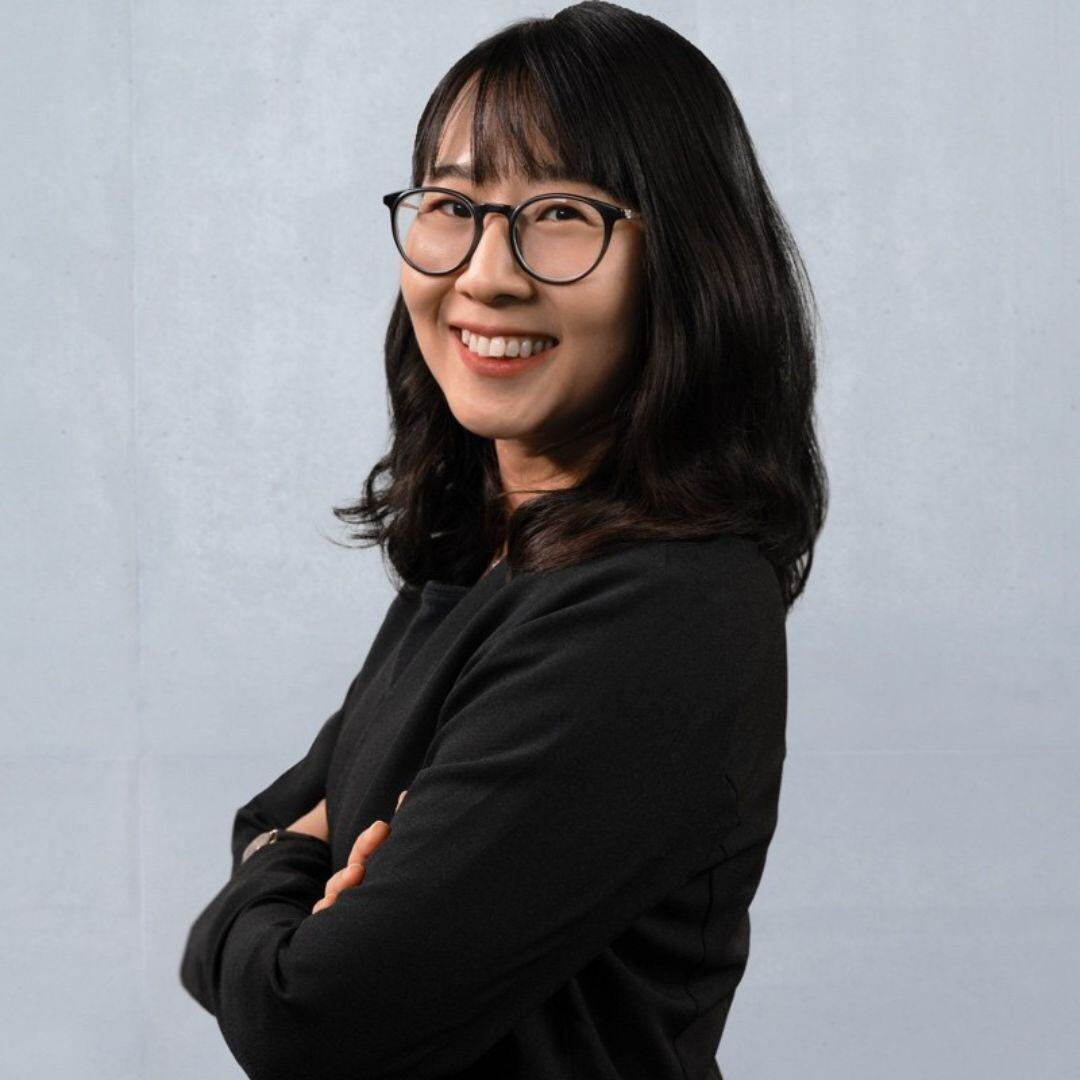
Shirley Tan

Dr Shirley Tan

Dr Shirley Tan

Adjunct Professor

Fachgebiet

Biographie

Dr. Shirley Tan ist eine angesehene Pädagogin und Forscherin, die sich auf Bildungsmethoden und Geschäftskommunikation spezialisiert hat. Sie kam 2024 als Gastdozentin für Praktische Künste an die EHL und konzentrierte sich auf die Einführung in die Geschäftskommunikation. Anschließend unterrichtete sie weiterhin den Kurs „Akademisches Schreiben” und wurde zur Kursvertreterin ernannt.

In ihrem Unterricht legt sie Wert darauf, den Studierenden die Relevanz und Zusammenhänge zwischen dem Lernen und dem Arbeitsplatz bewusst zu machen und ihnen klare, effektive und professionelle Kommunikationsfähigkeiten zu vermitteln, damit sie als zukünftige Führungskräfte in der Hotellerie erfolgreich sein können. Als Empfängerin des renommierten MEXT-Stipendiums der japanischen Regierung promovierte Shirley Tan in Erziehungswissenschaften an der Universität Nagoya. Außerdem hat sie einen Master-Abschluss in Englisch als Zweitsprache von der National University of Malaysia. Mit ihrer umfangreichen Erfahrung im Unterrichten der englischen Sprache hat sie in Malaysia, Japan und der Schweiz auf verschiedenen Bildungsebenen, von der Grundschule bis zur Hochschule, unterrichtet und so ihr Verständnis für unterschiedliche Kultur- und Kommunikationsstile erweitert.

Über ihre Lehrtätigkeit hinaus ist Shirley als Forscherin im Bereich der Lehrerausbildung tätig. Sie ist Mitherausgeberin der Q1-rangierten Fachzeitschrift Irish Educational Studies und Mitglied des Exekutivkomitees der World Association of Lesson Studies. Außerdem erhielt sie eine Erasmus+-Förderung für ein Projekt zur Lehrerausbildung. Auf der Grundlage ihrer pädagogischen Expertise führt sie Fortbildungen für Praktiker weltweit durch und verbreitet ihre Forschungsergebnisse durch wissenschaftliche Publikationen und Vorträge. Sie bringt eine globale Perspektive und fundierte pädagogische Kenntnisse in ihre Lehre an der EHL ein.


Auszeichnungen

21st Century Human Development Research Award 2025, Nagoya University

Ausbildung

PhD in Educational Sciences (Methods ofEducation), Nagoya University, Japan

Unterrichtete Kurse

SCHOOL OF PRACTICAL ARTS
• Introduction to Business Communication
BACHELOR OF SCIENCE IN INTERNATIONAL HOSPITALITY MANAGEMENT
• Academic writing

Unterrichtsort

EHL Campus Lausanne

Zeitschriftenpublikationen

Sarkar Arani, M. R., Lander, B., Shibata, Y., Iksan, Z., & Tan, S.(2025). “Doingfractions” and “understanding fairness”: Examining the cultural scripts of amathematics lesson through the eyes of Japanese and Malaysian educators. PROSPECTS.https://doi.org/10.1007/s11125-024-09714-8<spanlang=en-gb> </spanlang=en-gb>

Tan, S.,Goei, S. L., & Willemse, T. M. (2024). Global insights on lesson study ininitial teacher education: A systematic literature review encompassing English,Japanese, and Chinese language sources. Teaching and Teacher Education, 152,104791. <ahref="https:>https://doi.org/https://doi.org/10.1016/j.tate.2024.104791</ahref="https:><spanlang=en-gb></spanlang=en-gb>

Tan,S. (2024). Get on board withvisualising students’ thinking through bansho in Lesson Study. Pedagogical Dialogue 49<spanlang=fr>(3),24-33.https://doi.org/ 10.62670/2308-7668.2024.49.3.003</spanlang=fr>

Sakamoto,M., Tan,S. &Clivaz,S. (2024). Social, Cultural and PoliticalPerspectives of Generative AI in Teacher Education: Lesson Planning in JapaneseTeacher Education. Exploring New Horizons:Generative Artificial Intelligence and Teacher Education<spanlang=en-us style="line-height: 115%;">,178.</spanlang=en-us>

Tan, S. A. C. Y., Jill, L. S.S., Tan, S., & AkhaviZadegan, R. (2023). Exploring the Inclusivity ofAssessment ePortfolio for Multimodal Literacy During the Pandemic: A Case Studyin Malaysian Higher Education. In B. More, S. Biju, & V. Pallath (Eds.),Improving Inclusivity in Higher Education : Addressing the Digital Divide inthe COVID Pandemic (pp. 139-161). Springer Nature Singapore. <ahref="https:>https://doi.org/10.1007/978-981-99-5076-8_9 <spanlang=en-us></spanlang=en-us></ahref="https:>

Tan, S., Clivaz, S., & Sakamoto, M. (2023). Presenting multiple representationsat the chalkboard: bansho analysis of a Japanese mathematics classroom. Journalof Education for Teaching, 49(4), 630-647. <ahref="https:>https://doi.org/10.1080/02607476.2022.2150538</ahref="https:><spanlang=en-gb> </spanlang=en-gb>

Tan, S.(2022). Variations of Board Writing Styles in Japanese Schools: How Is ItRelated to the Teaching of School Subjects? The Teacher Educator, 1-21. <spanlang=en-gb>https://doi.org/10.1080/08878730.2022.2140237<spanlang=en-gb></spanlang=en-gb></spanlang=en-gb>

Tan, S., & Zadegan, R. A. (2022). EmpoweringYoung Women with Flexible Online English Literacy Education. The UniversityGrapevine(10), 12-14.

Tan,S. (2021). Banshoas Part of Lesson and Lesson Study: From the Origins to the Present. <spanlang=en-gb>International Journalfor Lesson and Learning Studies.</spanlang=en-gb> 10(4), 378-392.https://doi.org/10.1108/IJLLS-09-2021-0076

Clivaz,S., Sakamoto, M. et Tan, S. (2021). Comment une addition peut-elle devenir unesoustraction ? Le rôle du schéma en barres dans une leçon de mathématiquesjaponaise. Revue de Mathématiques pour l'école, (236),27-35.

<spanlang=fr> Tan,S., Nozaki, S., Fu, H., & Shibata, Y. (2021). The principles of teacher’sdecision-making in Japanese board writing (bansho) process. Asia PacificJournal of Education, 28(3), 1–16.https://doi.org/10.1080/02188791.2021.1924119 </spanlang=fr>

Tan, S., Fukaya, K., & Nozaki, S. (2018). Development of bansho (boardwriting) analysis as a research method to improve observation and analysis ofinstruction in lesson study. International Journal for Lesson and LearningStudies, 7(3), 230-247.https://doi.org/10.1108/IJLLS-02-2018-0011